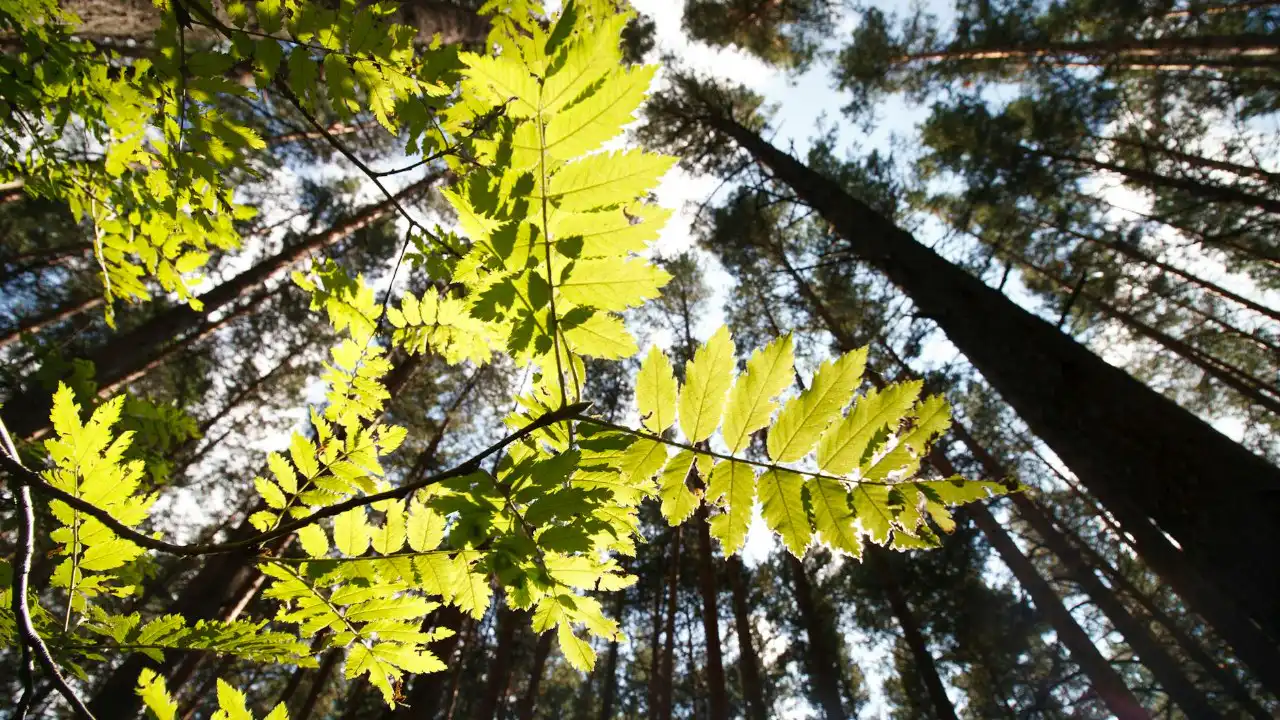
Forests across Karnataka serve as critical carbon sinks, absorbing millions of tonnes of atmospheric carbon dioxide annually while regulating local weather patterns and preserving biodiversity. From the Western Ghats rainforests to the dry deciduous woodlands of the northern districts, these ecosystems function as natural climate regulators that influence everything from monsoon reliability to groundwater recharge rates.
Understanding how forests mitigate climate change requires examining their role beyond simple tree cover. The state’s forest ecosystems operate through interconnected biological, chemical, and physical processes that collectively reduce greenhouse gas concentrations while building resilience against extreme weather events that increasingly affect Karnataka’s agricultural economy and urban centers.
Table of Contents
Carbon Sequestration Through Photosynthesis and Biomass Storage
Trees remove carbon dioxide from the atmosphere through photosynthesis, converting it into oxygen and storing carbon within their trunks, branches, roots, and leaves. A single mature tree in Karnataka’s Western Ghats can sequester approximately 22 kilograms of carbon dioxide annually, with evergreen species demonstrating higher sequestration rates than deciduous varieties. This biological process transforms atmospheric carbon into solid biomass that remains locked away for decades or centuries, depending on tree longevity.
Forest soil represents an equally important carbon reservoir. According to soil organic carbon dynamics research, the top one meter of forest soil in tropical regions stores more carbon than the vegetation itself. Decomposing organic matter, root systems, and microbial activity create carbon-rich humus layers that prevent atmospheric release while improving soil fertility for surrounding agricultural lands.
The Western Ghats biodiversity hotspot, stretching through Karnataka’s western districts, contains some of India’s densest carbon stocks per hectare. Old-growth forests in regions like Kodagu and Uttara Kannada sequester carbon far more efficiently than plantation forests or recently afforested areas, highlighting the importance of preserving existing mature ecosystems rather than relying solely on new tree planting initiatives.
Temperature Regulation and Microclimate Stabilization
Forests moderate local and regional temperatures through evapotranspiration, the process by which trees release water vapor through their leaves. This cooling mechanism lowers ambient temperatures by two to eight degrees Celsius in forested areas compared to adjacent cleared land. Bangalore’s remaining green spaces demonstrate this effect, with park-adjacent neighborhoods experiencing measurably cooler daytime temperatures than concrete-dominated zones.
Tree canopies also provide shade that reduces ground-level heat absorption and creates microclimates supporting diverse flora and fauna. These cooler forest interiors maintain humidity levels that sustain ecological processes even during Karnataka’s increasingly intense summer months. The loss of forest cover correlates directly with rising local temperatures and altered precipitation patterns across the state.
Monsoon Pattern Stabilization and Watershed Protection
Karnataka’s forests play a documented role in maintaining monsoon reliability and intensity. Large forested areas influence atmospheric moisture circulation, with the Western Ghats acting as a critical barrier that triggers orographic rainfall across the state’s western regions. Deforestation in these areas has contributed to erratic monsoon behavior observed over the past two decades, affecting agricultural productivity statewide.
Forest ecosystems regulate water cycles beyond rainfall generation. Tree root networks prevent soil erosion, reduce surface runoff, and enhance groundwater infiltration. The Cauvery basin forests, spanning multiple Karnataka districts, filter and slowly release water that sustains river flow during dry seasons. This hydrological regulation becomes increasingly vital as climate change intensifies drought frequency and severity.
| Forest Function | Climate Impact | Karnataka-Specific Benefit |
|---|---|---|
| Carbon sequestration | Reduces atmospheric CO2 concentration | Western Ghats stores 200+ tonnes carbon per hectare |
| Evapotranspiration | Lowers regional temperatures | Reduces urban heat island effect in Bangalore, Mysore |
| Watershed protection | Stabilizes water availability | Sustains Cauvery, Krishna river baseflows |
| Albedo modification | Reflects solar radiation | Maintains cooler microclimates in forested districts |
Biodiversity Preservation and Ecosystem Resilience
Biodiverse forests demonstrate greater climate resilience than monoculture plantations. Karnataka’s natural forests contain hundreds of tree species, each responding differently to temperature fluctuations, rainfall variability, and pest pressures. This diversity ensures that ecosystem functions continue even when individual species face climate-related stress.
Wildlife within these forests contributes to climate regulation through seed dispersal, pollination, and nutrient cycling. Species like the Asian elephant and Malabar giant squirrel facilitate forest regeneration by spreading seeds across vast territories, maintaining genetic diversity that allows forests to adapt to changing conditions. The interconnected nature of these ecosystems means protecting forests simultaneously safeguards the climate services they provide.
Opportunities for Climate Action Through Forest Conservation
Job seekers interested in environmental careers will find expanding opportunities in forest management, carbon credit verification, ecological restoration, and climate research as Karnataka strengthens its forest conservation programs. Karnataka Forest Department recruitment The state government has increased funding for afforestation projects and forest protection roles, creating positions ranging from field-level forest guards to specialized researchers analyzing carbon sequestration rates.
Residents can support forest-based climate solutions through participation in community afforestation drives, advocacy for protection of remaining green spaces, and lifestyle choices that reduce pressure on forest resources. Every hectare of forest preserved in Karnataka contributes measurably to global climate stability while delivering local benefits in water security, temperature moderation, and biodiversity conservation.
The relationship between Karnataka’s forests and climate stability extends beyond abstract environmental concepts to tangible impacts on agriculture, water availability, and livability across the state. Protecting and expanding these ecosystems represents one of the most cost-effective climate interventions available, delivering benefits that compound over decades while supporting livelihoods and ecological health simultaneously.