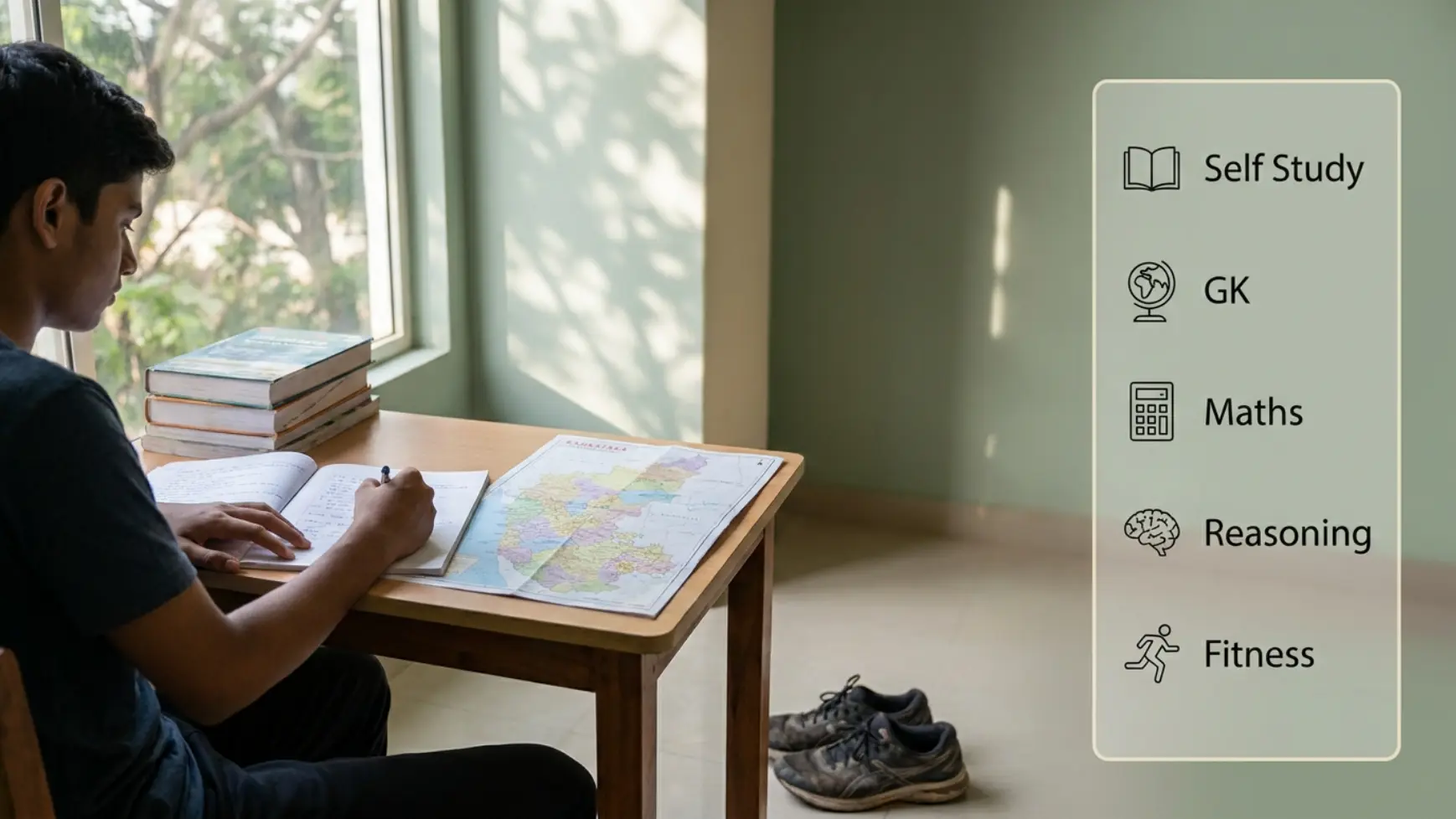
Preparing for the Karnataka Forest Guard exam independently requires strategic planning and disciplined execution. Thousands of candidates across Karnataka successfully clear this recruitment without enrolling in coaching institutes, relying instead on self-study methods tailored to the exam pattern. Understanding the syllabus structure, securing the right resources, and maintaining consistent practice forms the foundation of effective preparation.
Table of Contents
Understanding the Karnataka Forest Guard Exam Structure
The Karnataka Forest Department conducts recruitment through a multi-stage selection process. The written examination typically covers general knowledge, mathematics, reasoning ability, and questions specific to Karnataka’s geography and forest ecosystems. Physical efficiency tests follow the written exam, assessing candidates on running, high jump, and long jump parameters. Familiarity with this structure helps candidates allocate preparation time appropriately across different sections.

Previous recruitment cycles show that general knowledge and Karnataka-specific questions carry substantial weightage. Candidates must focus on the Western Ghats biodiversity, protected forest areas like Bandipur and Nagarhole, and state-level environmental policies. The mathematics and reasoning sections test fundamental concepts rather than advanced problem-solving, making them accessible through targeted practice.
| Exam Component | Topics Covered | Preparation Time Allocation |
|---|---|---|
| General Knowledge | Current affairs, Karnataka geography, Indian history | 35% |
| Mathematics | Arithmetic, basic algebra, percentages | 25% |
| Reasoning | Logical sequences, analogies, problem-solving | 20% |
| Karnataka Specific | Forest zones, wildlife sanctuaries, local administration | 20% |
Building Your Study Resource Library
Self-preparation succeeds when candidates compile quality materials from verified sources. Government publications provide the most reliable content for Karnataka-specific topics. The Karnataka Forest Department website publishes official notifications, previous exam patterns, and syllabus details that form your primary reference base. Standard school-level textbooks for mathematics and reasoning cover the required concepts adequately without overwhelming candidates with unnecessary complexity.
Daily newspapers, particularly Kannada editions covering state affairs, strengthen current affairs knowledge relevant to Karnataka. Monthly current affairs compilations help consolidate information systematically. For environmental and forest topics, resources from Karnataka Forest Department official homepage offer authentic data on state forest cover, conservation projects, and departmental initiatives. Creating a rotating study schedule that touches each subject area weekly prevents knowledge gaps from forming.
Developing a Realistic Study Timeline

A structured timeline spanning four to six months provides adequate preparation for most candidates. The initial phase should focus on completing the entire syllabus once, identifying weak areas without pressure. Allocate two months for this comprehensive coverage, dedicating specific days to specific subjects rather than mixing topics daily. This approach builds deeper understanding compared to superficial daily rotations across all subjects.
The intermediate phase emphasizes revision and practice. Solving previous year question papers reveals actual exam difficulty levels and frequently tested concepts. Candidates should attempt at least 15 to 20 mock tests under timed conditions, replicating exam pressure. The final month before examination requires intensive revision of notes, formula sheets, and weak topics identified during mock tests. Physical fitness training should run parallel throughout the preparation period, not added as an afterthought.
Mastering Karnataka Forest and Environment Topics
Karnataka hosts significant biodiversity across its forest divisions, making state-specific knowledge crucial. Candidates must memorize major wildlife sanctuaries including Bandipur Tiger Reserve, Bhadra Wildlife Sanctuary, and Dandeli-Anshi Tiger Reserve along with their geographic locations and flagship species. Understanding the Western Ghats ecosystem, recognized as UNESCO World Heritage Centre listing, provides context for conservation questions that frequently appear in the exam.

Forest coverage statistics, afforestation programs, and the Karnataka Forest Act provisions require factual accuracy. Candidates should prepare notes on forest types found in Karnataka, distinguishing between tropical evergreen, moist deciduous, and dry deciduous forests. Questions often test knowledge of tree species native to the state, threats to forest ecosystems, and government initiatives for wildlife protection. Connecting theoretical knowledge with ground realities from districts like Uttara Kannada, Shivamogga, and Kodagu strengthens retention.
Physical Fitness Preparation Without Gym Access
Physical standards constitute an elimination round that many academically strong candidates fail. The running component typically requires completing 1,600 meters within a specified time, while high jump and long jump have minimum qualifying distances. Training without professional coaching requires consistency and gradual progression rather than intensive last-minute efforts.
Begin cardiovascular conditioning three months before expected physical tests. Running shorter distances initially, then incrementally increasing to the required 1,600 meters builds stamina safely. Public parks in Bengaluru, Mysuru, and other Karnataka cities offer suitable running tracks at no cost. For jumping events, practicing basic techniques through online tutorials and measuring progress weekly ensures steady improvement. Combining running with bodyweight exercises like squats, lunges, and core strengthening enhances overall fitness levels required for forest guard duties.
Managing Self-Doubt and Maintaining Momentum
Independent preparation tests mental resilience as much as academic capability. Candidates often experience isolation compared to classroom environments where peer interaction provides motivation. Setting weekly milestones creates tangible progress markers that combat discouragement during difficult phases. Joining online forums or study groups specific to Karnataka Forest Guard recruitment connects you with others following similar paths without financial commitment.
Regular self-assessment through mock tests provides objective feedback on preparation levels. Scoring below expectations in initial attempts should trigger analysis of weak areas rather than abandonment of the self-study approach. Thousands have demonstrated that coaching institutes offer convenience but not exclusive pathways to success. Your ability to structure time, access free resources strategically, and maintain discipline determines outcomes more than external guidance. The forest guard role demands self-reliance and problem-solving under minimal supervision, qualities you develop through independent exam preparation itself.