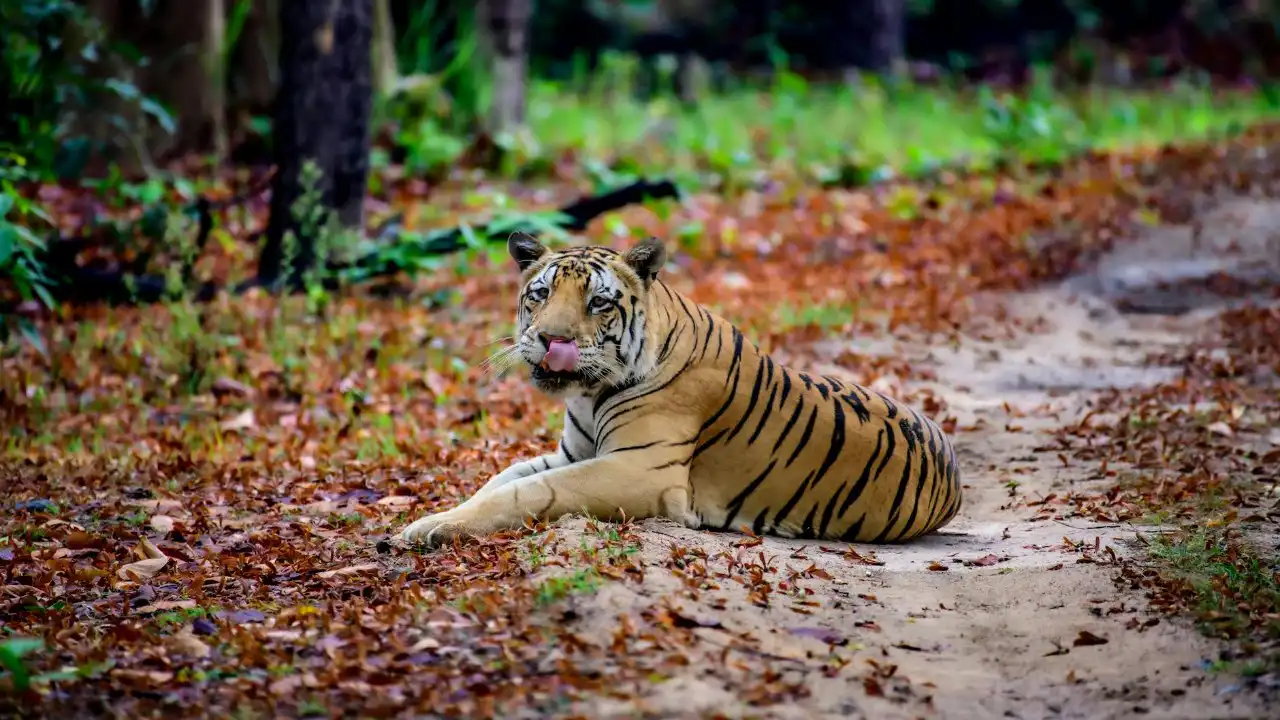
Bandipur National Park stands as one of Karnataka’s most critical biodiversity reserves, spanning 874 square kilometers across the Chamarajanagar district in southern Karnataka. Established in 1974 under Project Tiger, this protected area forms part of the Nilgiri Biosphere Reserve and serves as a vital corridor connecting multiple wildlife sanctuaries across state boundaries. The park’s importance extends beyond wildlife conservation to include watershed protection, climate regulation, and sustainable livelihoods for communities living on its periphery.
Table of Contents
Geographic Location and Forest Composition
Bandipur occupies the Deccan Plateau’s southern edge where the Western Ghats meet the Nilgiri Hills. The park shares boundaries with Nagarhole National Park to the northwest, Mudumalai Tiger Reserve in Tamil Nadu to the south, and Wayanad Wildlife Sanctuary in Kerala to the southwest. This geographic positioning creates one of India’s largest protected wildlife corridors, spanning approximately 2,183 square kilometers when combined with adjacent reserves.

The forest composition divides into three distinct zones. Dry deciduous forests dominate the eastern sections, characterized by teak, rosewood, sandalwood, and Indian kino trees. Moist deciduous forests appear in the western regions with higher rainfall, supporting species like terminalia, lagerstroemia, and bamboo thickets. Patches of evergreen forest exist in sheltered valleys and stream corridors, housing endemic plant species found nowhere else in the Deccan region.
| Forest Type | Area Coverage | Dominant Species | Wildlife Association |
|---|---|---|---|
| Dry Deciduous | 65% | Teak, Rosewood, Sandalwood | Elephants, Spotted Deer, Langurs |
| Moist Deciduous | 30% | Bamboo, Terminalia, Lagerstroemia | Tigers, Gaur, Wild Boar |
| Evergreen Patches | 5% | Jamun, Matti, Honne | Malabar Giant Squirrel, Hornbills |
Wildlife Diversity and Tiger Conservation
According to Status of Tigers 2022 report, Bandipur supports a thriving tiger population with density estimates among the highest in southern India. The park provides ideal habitat conditions with sufficient prey base including chital, sambar, muntjac, and wild pig. Beyond tigers, the reserve protects Asiatic elephants, Indian leopards, sloth bears, dholes, and gaur in significant numbers.
The avian diversity includes over 200 recorded species. Critically endangered species like the Indian vulture and long-billed vulture find refuge here, while the forest canopy supports Malabar pied hornbills, crested serpent eagles, and various woodpecker species. Reptilian fauna includes the mugger crocodile in water bodies, king cobra in forested areas, and various monitor lizard species throughout the park.
Conservation Challenges and Management Responses
Human-wildlife conflict represents the most persistent conservation challenge facing Bandipur. Elephant crop raiding occurs regularly in villages bordering the park, particularly during harvest seasons when crops attract hungry herds. The Karnataka Forest Department has implemented solar-powered electric fencing along vulnerable stretches, covering approximately 180 kilometers of the park boundary. Early warning systems using SMS alerts notify villagers when elephant herds approach agricultural areas.
Poaching pressures, though reduced from historical levels, continue to threaten valuable species. Sandalwood smuggling attracted significant criminal activity until coordinated enforcement operations dismantled major networks operating across Karnataka borders. Wildlife poaching for bushmeat and body parts requires constant vigilance, with anti-poaching camps distributed throughout the park maintaining regular patrol schedules.
The night traffic ban implemented on the highway passing through Bandipur has generated considerable debate. Instituted to reduce wildlife mortality from vehicle strikes, the ban applies from 9 PM to 6 AM on National Highway 212. While this measure has demonstrably reduced roadkill incidents, it affects commercial transport and local connectivity, illustrating the complex balance between conservation needs and development pressures.
Economic and Ecological Value
Bandipur contributes substantially to Karnataka’s tourism economy while maintaining strict visitation controls. According to Karnataka Forest Department tourism, regulated safari operations generate revenue that funds conservation activities and employs local communities as guides, drivers, and hospitality workers. The park operates on a limited entry system, capping daily visitors to minimize disturbance to wildlife.
The ecological services provided by Bandipur extend far beyond its boundaries. The forest acts as a critical water catchment area, feeding the Kabini and Moyar rivers that supply irrigation and drinking water to districts across southern Karnataka and northern Tamil Nadu. Carbon sequestration by the mature forest stands contributes to regional climate stability, while the park serves as a genetic reservoir for plant species increasingly rare in surrounding agricultural landscapes.
Employment and Community Participation
The Forest Department directly employs over 400 staff members including forest guards, range officers, veterinarians, and administrative personnel. Indirect employment through tourism, transportation, and hospitality sectors provides livelihoods for thousands of Karnataka residents in surrounding taluks. The Eco-Development Committees established in fringe villages create structured participation channels, allowing local communities to benefit from conservation while reducing dependency on forest resources.
Restoration projects focusing on degraded forest areas and invasive species removal offer seasonal employment opportunities. These initiatives improve habitat quality while providing income during agricultural off-seasons. The integration of traditional ecological knowledge from indigenous communities has enhanced management strategies, particularly in fire management and wildlife monitoring protocols.
Future Conservation Priorities
Climate change poses emerging challenges that require adaptive management strategies. Shifting rainfall patterns affect water availability during dry seasons, concentrating wildlife around limited water sources and increasing competition. The Forest Department has augmented natural water bodies with artificial watering points, though this intervention requires careful management to avoid altering natural animal behavior patterns.
Strengthening the wildlife corridor connectivity with adjacent protected areas remains essential for maintaining genetic diversity and allowing natural animal movement. Land acquisition efforts continue in identified bottleneck areas where development threatens corridor integrity. Research programs monitoring animal movements using radio collars and camera traps provide data guiding these conservation planning efforts across Karnataka and neighboring states.