Karnataka hosts 5 national parks and over 25 wildlife sanctuaries spanning diverse ecosystems from Western Ghats rainforests to Deccan Plateau scrublands. These protected areas form recurring topics in Karnataka Public Service Commission examinations, forest department recruitment tests, and environmental science curricula across the state. Candidates preparing for competitive exams must understand not just the names and locations of these reserves, but also their ecological significance, flagship species, and conservation challenges specific to Karnataka’s geography.
Table of Contents
Major National Parks in Karnataka
Bandipur National Park, established in 1974, covers 874 square kilometers in Chamarajanagar district and forms part of the Nilgiri Biosphere Reserve. The park maintains one of India’s highest tiger densities and serves as a critical elephant corridor connecting Kerala’s Wayanad and Tamil Nadu’s Mudumalai reserves. Exam questions frequently test knowledge of Bandipur’s Project Tiger history and its role in the Asian elephant conservation framework.
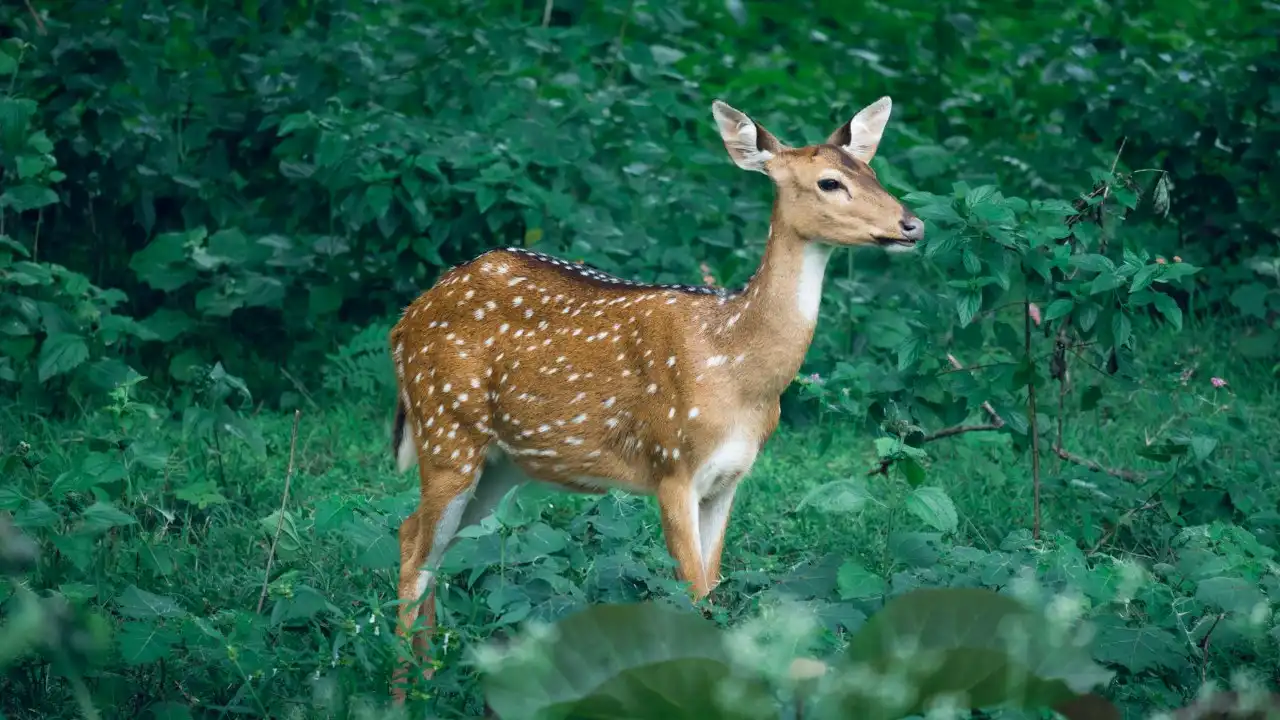
Nagarhole National Park, also known as Rajiv Gandhi National Park, spans 643 square kilometers in Kodagu and Mysuru districts. The Kabini River flows through this reserve, creating seasonal backwaters that concentrate wildlife during summer months. According to Wildlife Institute of India tiger estimation, Nagarhole records among the highest predator-prey ratios in Indian protected areas. The park’s moist deciduous forests contrast sharply with the drier vegetation zones found in northern Karnataka reserves.
Anshi National Park in Uttara Kannada district protects 340 square kilometers of evergreen forests in the Western Ghats biodiversity hotspot. The park merged administratively with Dandeli Wildlife Sanctuary in 2015 to form the Anshi Dandeli Tiger Reserve. This consolidation appears regularly in current affairs sections of Karnataka exams. The reserve shelters the black panther, king cobra, and Malabar giant squirrel within its dense canopy ecosystems.
Wildlife Sanctuaries Across Ecological Zones
Karnataka’s sanctuaries occupy distinct biogeographic zones, a classification framework essential for ecology-focused exam papers. Bhadra Wildlife Sanctuary in Chikmagalur district encompasses 492 square kilometers of moist deciduous forest and sustains significant gaur populations. The Bhadra reservoir within the sanctuary created rehabilitation challenges when Project Tiger designation required village relocations in the early 2000s.

Ranganathittu Bird Sanctuary near Mysuru, though small at just 0.67 square kilometers, holds disproportionate exam relevance as Karnataka’s first avian reserve. Established in 1940, the sanctuary’s six islets on the Kaveri River attract painted storks, Asian openbills, and spot-billed pelicans during breeding season. Questions on migratory bird patterns and wetland conservation frequently reference Ranganathittu’s ecological services.
Sharavathi Valley Wildlife Sanctuary protects 431 square kilometers of transitional forest between coastal plains and Western Ghats escarpment. The sanctuary’s elevation gradient from 100 meters to 850 meters supports diverse habitat types, making it a model study area for vegetation zonation concepts tested in forest service examinations.
Conservation Challenges and Examination Focus Areas
Human-wildlife conflict emerges as a persistent theme in Karnataka’s protected area management. Elephants from Bandipur and Nagarhole regularly enter agricultural zones during crop seasons, creating economic losses that examination case studies explore. The state’s compensation mechanisms and early warning systems represent applied conservation topics candidates must analyze critically.

Mining pressures threaten several sanctuaries, particularly in the iron ore-rich Bellary-Hospet region. Daroji Sloth Bear Sanctuary faced industrial encroachment debates that appear in environmental legislation questions. Understanding the balance between development imperatives and biodiversity protection reflects the analytical skills Karnataka PSC examinations increasingly test.
Invasive species management forms another examination staple. Lantana camara infestations across Bandipur, Nagarhole, and BR Hills Wildlife Sanctuary alter ground layer vegetation and fire regimes. Karnataka Forest Department management protocols outline mechanical and biological control methods that feature in forest ecology papers.
Examination Strategy and Information Retention
| Protected Area | District(s) | Area (sq km) | Key Species | Special Feature |
|---|---|---|---|---|
| Bandipur National Park | Chamarajanagar | 874 | Tiger, Elephant, Gaur | Nilgiri Biosphere core zone |
| Nagarhole National Park | Kodagu, Mysuru | 643 | Tiger, Leopard, Wild Dog | Kabini backwaters wildlife viewing |
| Anshi National Park | Uttara Kannada | 340 | Black Panther, King Cobra | Western Ghats evergreen forests |
| Bhadra Wildlife Sanctuary | Chikmagalur, Shivamogga | 492 | Tiger, Gaur, Wild Pig | Village relocation case study |
| Ranganathittu Bird Sanctuary | Mandya | 0.67 | Painted Stork, Pelican | Karnataka’s oldest bird reserve |
Candidates should organize protected areas by district rather than alphabetically, as district-level geography questions require instant recall of which reserves fall within specific administrative boundaries. Mapping exercises that plot sanctuaries on Karnataka’s outline strengthen spatial memory more effectively than text-based revision alone.
Understanding establishment years helps with timeline questions, while flagship species knowledge connects to broader biodiversity conservation frameworks. Exam papers increasingly test application rather than rote memorization, requiring candidates to propose management solutions for hypothetical scenarios based on real reserve characteristics.
Beyond Examinations: Ecological Literacy
Preparation for Karnataka’s protected area topics builds ecological literacy that extends beyond examination halls. Recognizing the connectivity between Bandipur, Nagarhole, Mudumalai, and Wayanad as a single functional landscape clarifies why isolated conservation efforts fail. The economic value of ecosystem services these areas provide, from watershed protection to climate regulation, forms the foundation for informed environmental citizenship.
Job seekers targeting forest department positions, environmental consulting firms, or wildlife NGOs gain practical knowledge frameworks through systematic study of Karnataka’s reserves. The state’s diverse protected area network offers real-world laboratories for conservation principles that govern sustainable development across India’s rapidly changing landscapes.