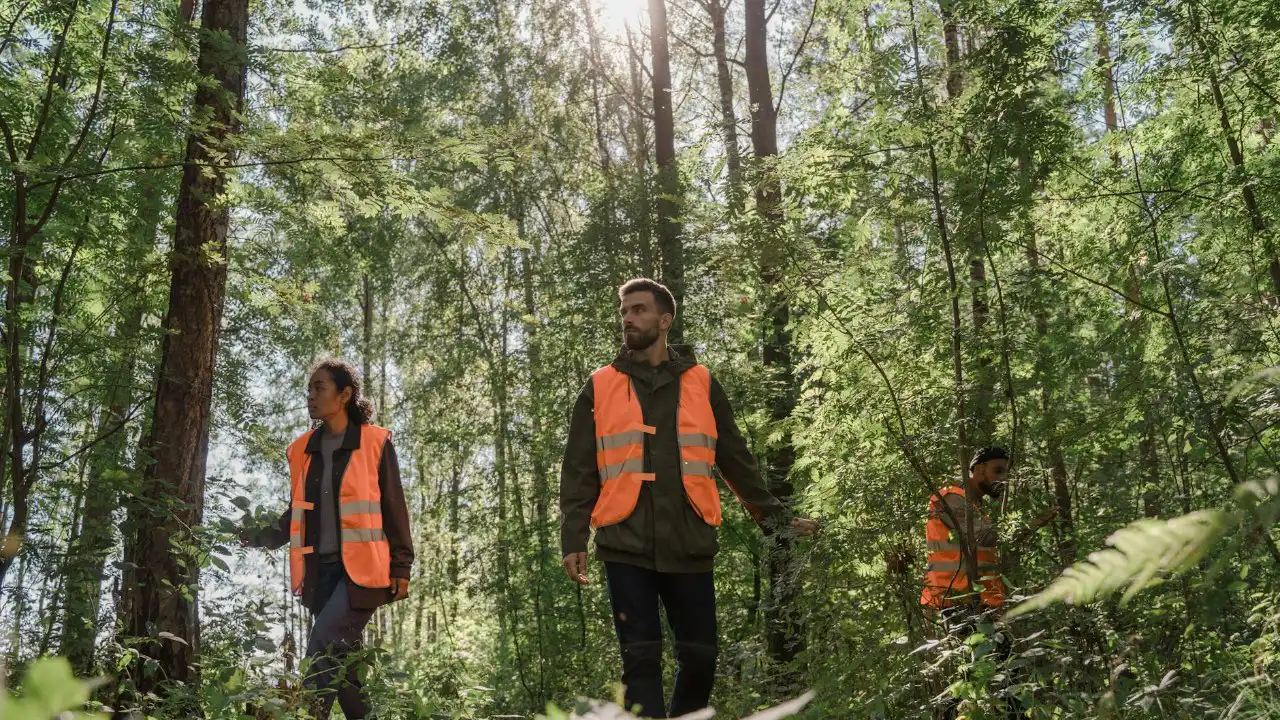
The Karnataka Forest Department periodically announces recruitment for Beat Forester positions, a role that serves as the backbone of forest conservation and wildlife protection across the state. Beat Foresters work directly on the ground in Karnataka’s diverse ecosystems, from the Western Ghats rainforests to the dry deciduous forests of the northern districts, making this position crucial for environmental stewardship and biodiversity preservation.
Understanding the complete recruitment framework—from eligibility criteria to physical standards—is essential for candidates preparing to join Karnataka’s forest services. This examination process combines academic qualifications, physical fitness testing, and knowledge assessment to identify individuals capable of handling the demanding responsibilities of forest management.
Table of Contents
Educational and Age Eligibility Requirements

Candidates must hold a Bachelor of Science degree from a recognized university, with subjects directly relevant to forest management. The acceptable combinations include Botany, Zoology, Chemistry, Agriculture, Forestry, Horticulture, Sericulture, or Environmental Science. This academic foundation ensures that Beat Foresters possess the scientific knowledge necessary for ecosystem management and species identification.
The age bracket typically ranges from 18 to 28 years as of the notification date, with relaxation provisions according to government norms. Reserved category candidates receive age concessions—three years for Other Backward Classes (OBC) and five years for Scheduled Caste (SC) and Scheduled Tribe (ST) applicants. These provisions align with Karnataka’s commitment to inclusive representation in forest services.
Physical standards form a critical component of eligibility. Male candidates must meet a minimum height of 163 cm with an 81 cm chest measurement (expandable to 86 cm). Female candidates require a minimum height of 151 cm. These specifications reflect the physically demanding nature of forest patrol duties across Karnataka’s varied terrain, from mountainous regions to dense forest blocks.
Examination Structure and Syllabus Coverage

The written examination comprises objective multiple-choice questions covering four primary domains. General Knowledge questions test awareness of current affairs, Indian history, Karnataka state facts, and constitutional provisions. This section evaluates whether candidates understand the broader context in which forest conservation operates, including recent environmental policies and landmark judicial decisions.
The Science section focuses on undergraduate-level concepts in Biology, Chemistry, and Environmental Science. Questions probe understanding of ecological principles, plant taxonomy, animal behavior, and biochemical processes relevant to forest ecosystems. Candidates should expect questions on biodiversity hotspots, endemic species of Karnataka, and forest ecology dynamics.
Mathematics and Reasoning components assess analytical capabilities essential for field data collection and problem-solving. Mathematical questions cover arithmetic, algebra, geometry, and basic statistics—skills required when conducting forest surveys or analyzing wildlife census data. Reasoning sections test logical thinking through patterns, sequences, and spatial relationships.

A dedicated Forestry section examines specialized knowledge of forest management practices, wildlife conservation laws, and Karnataka-specific forest types. According to Karnataka Forest Department syllabus document, this portion includes questions on silvicultural systems, forest fire management, Joint Forest Management programs, and the Wildlife Protection Act provisions. Candidates must demonstrate familiarity with tree species native to Karnataka and their ecological roles.
| Exam Component | Topics Covered | Approximate Weightage |
|---|---|---|
| General Knowledge | Current affairs, Indian polity, Karnataka history and geography | 25% |
| Science | Biology, Chemistry, Environmental Science | 30% |
| Mathematics & Reasoning | Arithmetic, algebra, logical reasoning, data interpretation | 20% |
| Forestry & Conservation | Forest management, wildlife laws, ecology, Karnataka forests | 25% |
Physical Efficiency Test Components
Candidates who clear the written examination advance to the Physical Efficiency Test (PET), a qualifying stage that assesses stamina and physical capability. The PET does not carry marks but determines eligibility for final selection. Male candidates must complete a 10-kilometer run within 60 minutes, while female candidates must cover five kilometers within 40 minutes. These standards ensure candidates can navigate extensive forest beats during patrol duties.
Additional physical tests may include activities simulating field conditions—carrying equipment over distance, climbing exercises, or endurance challenges specific to forest work. The exact format varies by recruitment cycle, but the underlying principle remains consistent: Beat Foresters must possess the physical resilience to work in remote locations with limited infrastructure.
Medical fitness certification forms the final physical assessment component. Vision standards require 6/6 in one eye and 6/9 in the other, correctable to 6/6. Color vision must be normal to accurately identify plant species, assess forest health, and spot wildlife. Candidates with conditions incompatible with prolonged outdoor work in challenging climates face disqualification.
Application Process and Selection Timeline
The Karnataka Public Service Commission (KPSC) typically manages Beat Forester recruitment through online application portals. Candidates must upload educational certificates, caste certificates (if claiming reservation), and recent photographs meeting specified dimensions. Application fees vary by category, with exemptions for SC/ST candidates as per state policy.
The complete selection timeline extends four to six months from notification to final result declaration. Written examination results usually appear within two months of the test date, followed by PET scheduling for successful candidates. Document verification occurs post-PET, where original certificates undergo scrutiny against uploaded copies.
Final merit lists incorporate written exam scores and reservation provisions, as physical tests serve only as qualifiers. According to Karnataka Forest Department recruitment official site, candidates should maintain all original documents and multiple photocopies throughout the process, as verification occurs at multiple stages.
Preparation Strategy and Resource Allocation
Effective preparation requires balancing subject knowledge with physical conditioning. Dedicate morning hours to physical training, building gradually toward PET standards rather than attempting full distances immediately. Evening study sessions should rotate through subject areas, spending additional time on Forestry topics that differentiate this examination from general competitive tests.
Karnataka-specific forest knowledge proves decisive in final rankings. Study the state’s forest divisions, major wildlife sanctuaries like Bandipur and Nagarhole, and conservation challenges unique to the region. Understanding Karnataka’s Forest Department organizational structure and recent initiatives demonstrates genuine interest beyond textbook preparation.
Previous years’ question papers reveal recurring themes and difficulty levels, though the Karnataka Forest Department updates syllabus content periodically to reflect current conservation priorities. Group study with fellow aspirants helps clarify complex ecological concepts and maintains motivation during the extended preparation period.
This recruitment pathway offers more than employment—it provides an opportunity to protect Karnataka’s natural heritage while building a meaningful career in environmental conservation. Thorough preparation across academic, physical, and practical dimensions positions candidates for success in securing one of these vital forestry positions.