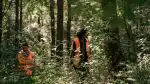
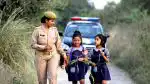
The Karnataka Forest Department conducts rigorous physical efficiency tests for candidates seeking positions as forest guards, forest watchers, and range forest officers across the state. These assessments evaluate running endurance, height standards, and chest measurements to ensure recruits possess the physical capability required for fieldwork in Karnataka’s diverse forest regions, from the Western Ghats to the deciduous forests of the Deccan Plateau.
Table of Contents
Running Test Requirements Across Forest Department Positions
Physical endurance forms the cornerstone of forest department recruitment. Male candidates appearing for forest guard positions must complete a 10-kilometer run within 50 minutes, while female candidates must finish a 5-kilometer run within 35 minutes. These standards apply uniformly across recruitment zones in Bengaluru, Mysuru, Mangaluru, and other districts.

Forest watcher positions maintain similar benchmarks. According to [CITE: Karnataka Forest Department recruitment physical standards official notification], male applicants face the same 10-kilometer requirement within 50 minutes, demonstrating the department’s emphasis on sustained cardiovascular fitness. The running test typically occurs on measured tracks at designated centers in Dharwad, Hubballi, and Belagavi during recruitment cycles.
Range forest officer candidates encounter slightly modified parameters. While the distance remains consistent at 10 kilometers for men, the time allowance adjusts to 55 minutes, reflecting the position’s broader responsibilities that balance fieldwork with administrative duties. Female aspirants for officer positions complete 5 kilometers within 40 minutes.
Height Standards by Category and Gender
Karnataka Forest Department maintains distinct height requirements segmented by category and gender. These measurements occur without footwear, with candidates standing erect against a calibrated height scale.
| Category | Male Height (cm) | Female Height (cm) |
|---|---|---|
| General / Unreserved | 168 | 158 |
| Scheduled Caste (SC) | 163 | 153 |
| Scheduled Tribe (ST) | 163 | 153 |
| Other Backward Classes (OBC) | 165 | 155 |
Candidates from hilly regions including Kodagu, Chikkamagaluru, and parts of Uttara Kannada receive relaxation of 2 centimeters in minimum height requirements. This accommodation recognizes physiological variations among populations native to Karnataka’s elevated terrain zones.
Ex-servicemen applying through lateral entry schemes receive height relaxation as per government directives. The verification process involves multiple measurements to ensure accuracy, with candidates required to present themselves at assessment centers during morning hours when spinal compression from daily activities remains minimal.
Chest Measurement Specifications for Male Candidates
Chest measurement applies exclusively to male applicants across all forest department positions. The assessment records two readings: unexpanded chest circumference and expanded chest circumference following deep inhalation. Minimum unexpanded chest measurement stands at 81 centimeters for general category candidates.
The expansion differential carries equal importance. Male candidates must demonstrate a minimum chest expansion of 5 centimeters between the relaxed and expanded states. This metric indicates respiratory capacity and thoracic flexibility, both essential for prolonged fieldwork in Karnataka’s varied topography.
Scheduled Caste and Scheduled Tribe candidates receive a 2-centimeter relaxation in minimum unexpanded chest measurement, reducing the requirement to 79 centimeters while maintaining the 5-centimeter expansion standard. The measurement occurs at nipple level with the candidate standing straight, shoulders relaxed, and arms hanging naturally.
Assessment officials use standardized measuring tapes calibrated against national standards. Three readings occur for each candidate—one unexpanded and two expanded measurements—with the average of expanded readings forming the basis for qualification determination.
Physical Qualification Process and Documentation
The physical efficiency test follows a structured sequence at designated centers throughout Karnataka. Candidates first undergo height verification, followed by chest measurement for males, concluding with the running assessment. Each stage operates as an elimination round, with failure at any point resulting in disqualification from subsequent tests.
Documentation requirements include the original admit card, valid photo identification matching application details, and medical fitness certificate issued within three months of the test date. [CITE: Karnataka government physical test medical certification requirements] specify that the certificate must come from a registered medical practitioner and explicitly clear the candidate for strenuous physical activity.
Candidates receive three opportunities to pass the running test during a single recruitment cycle if they fail the initial attempt but qualify in height and chest parameters. However, measurement-based disqualifications carry no such retesting provision. Results post within 48 hours on the official Karnataka Forest Department portal, with qualifying candidates advancing to the written examination phase.
Preparation Strategies for Physical Assessment Success
Systematic training beginning three to four months before scheduled test dates yields optimal results. Running preparation should progress gradually, starting with 3 to 4 kilometers daily and incrementally increasing distance while monitoring completion time. Training routes mimicking Karnataka’s terrain—incorporating inclines similar to those in Shivamogga or Hassan districts—build practical endurance.
Height remains a non-modifiable parameter, but candidates near threshold values should verify measurements multiple times using calibrated equipment to avoid surprises during official assessment. Maintaining proper posture and spinal health through stretching exercises ensures maximum measured height.
Chest expansion improves through targeted breathing exercises and upper body conditioning. Pranayama techniques, particularly those emphasizing deep diaphragmatic breathing, increase lung capacity over consistent practice periods. Swimming and cycling complement running training while reducing joint impact stress during preparation phases.
Nutrition plays a supporting role. A balanced diet with adequate protein supports muscle recovery, while proper hydration prevents performance degradation during endurance tests. Candidates should simulate test conditions during training, completing timed runs at similar hours to scheduled assessments to acclimate circadian rhythms and optimize physical readiness for Karnataka Forest Department recruitment success.