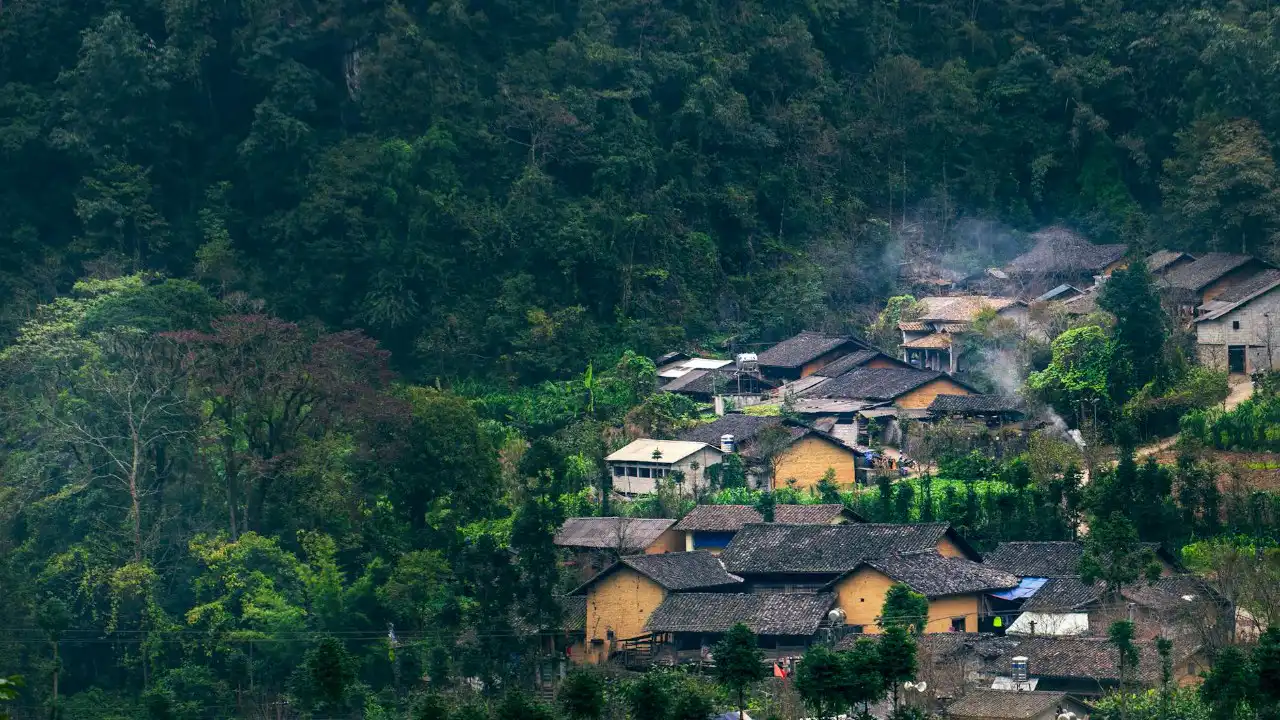
Rural communities across Karnataka depend on forests for survival, livelihoods, and cultural continuity. More than 38 percent of the state’s geographical area remains under forest cover, directly supporting millions of people in villages surrounding the Western Ghats, Malnad region, and the forested districts of Uttara Kannada, Kodagu, and Chikkamagalur. These ecosystems provide essential resources that cannot be replaced by industrial supply chains or urban infrastructure.
Table of Contents
Natural Resource Foundation for Daily Life
Forests supply rural households with fuelwood, fodder, building materials, and medicinal plants that form the backbone of subsistence economies. Women in villages throughout the Western Ghats spend an average of three to four hours daily collecting firewood and non-timber forest products. Without accessible forest resources, families would face severe energy poverty and nutritional deficiencies. Wild edibles such as jackfruit, tamarind, honey, and mushrooms supplement diets during agricultural lean periods, providing crucial micronutrients absent from cultivated crops.
Traditional medicine systems practiced in rural Karnataka rely heavily on forest-sourced herbs and roots. Practitioners harvest neem, tulsi, ashwagandha, and hundreds of other plant species to treat common ailments. This knowledge, passed through generations, remains the primary healthcare option for communities distant from medical facilities. The economic value of these ecosystem services, while difficult to quantify precisely, exceeds the income many villagers could generate through alternative means.
Livelihood Security Through Forest-Based Income
Collection and sale of non-timber forest products constitute a significant income stream for rural households. Communities legally harvest tendu leaves, beedi leaves, bamboo, rattan, and lac under government-regulated systems. According to [CITE: Karnataka forest department NTFP income statistics], these products generate substantial annual revenue for tribal and forest-dwelling populations who hold few alternative employment options.
| Forest Product | Primary Collection Season | Uses | Economic Importance |
|---|---|---|---|
| Tendu Leaves | April to June | Beedi rolling | High seasonal income |
| Bamboo | Year-round | Construction, handicrafts | Steady cash flow |
| Honey | January to May | Food, medicine | Premium market pricing |
| Tamarind | February to May | Culinary, medicinal | Reliable household income |
| Soap Nuts | October to December | Natural cleansers | Growing demand |
Forest-adjacent villages also benefit from employment in conservation programs, ecotourism ventures, and sustainable harvesting cooperatives. The Van Dhan Vikas Kendras operating in Karnataka train tribal communities to add value to forest products through processing and branding, increasing their market competitiveness and income retention.
Water Security and Agricultural Productivity

Forests regulate the hydrological cycle that sustains agriculture in Karnataka’s rural areas. Tree cover in the Western Ghats ensures consistent stream flow during dry months, recharging aquifers that farmers depend on for irrigation. Deforestation in the catchment areas of the Cauvery, Krishna, and Tungabhadra rivers has already reduced water availability during critical growing periods, forcing farmers to drill deeper borewells and shoulder higher costs.
Forested watersheds prevent soil erosion that would otherwise fill reservoirs with sediment and reduce their storage capacity. The root systems stabilize slopes, particularly important in the hilly terrain of Malnad and coastal districts where landslides threaten villages during monsoon months. Intact forest buffers also moderate microclimates, reducing temperature extremes that stress crops and livestock.
Climate Resilience and Disaster Mitigation
Rural communities face increasing climate variability, with forests providing essential protection against extreme weather events. Tree cover reduces wind velocity during cyclones affecting coastal Karnataka, while forest biomass absorbs and slows floodwaters during intense rainfall. Villages surrounded by degraded landscapes experience more severe impacts from the same weather patterns compared to those with healthy forest boundaries.
Carbon sequestration by Karnataka’s forests mitigates climate change at scales far beyond village borders, yet local communities experience the most immediate benefits. According to [CITE: Forest Survey of India Karnataka carbon stock assessment], the state’s forests store millions of tonnes of carbon that would otherwise accelerate atmospheric warming. Preserving this carbon sink protects the monsoon patterns that rural livelihoods depend upon.
Cultural Identity and Social Cohesion
Forests hold profound cultural significance for tribal and rural communities throughout Karnataka. Sacred groves, locally known as devarakadu or kan, serve as sites for religious ceremonies and community gatherings that reinforce social bonds. These protected forest patches often harbor rare biodiversity and traditional ecological knowledge that has practical applications in sustainable resource management.
Indigenous communities maintain detailed understanding of forest phenology, animal behavior patterns, and ecosystem relationships developed over centuries of observation. This knowledge guides sustainable harvesting practices and early warning systems for natural events. Young people leaving villages for urban employment represent a critical loss of this accumulated wisdom, making forest conservation inseparable from cultural preservation.
Sustaining Village Economies Through Conservation
Protecting forests requires recognizing rural communities as primary stakeholders rather than obstacles to conservation. Joint Forest Management programs that grant villages decision-making authority over local forest resources have demonstrated superior outcomes compared to top-down enforcement models. When communities receive tangible benefits from conservation, they invest labor and social capital in protecting those resources.
Sustainable forest management creates employment pathways for rural youth who might otherwise migrate to cities. Agroforestry systems that integrate trees with crops offer farmers diversified income while maintaining ecological functions. The challenge lies in scaling successful models and ensuring equitable distribution of benefits across gender and caste lines within villages. For Karnataka’s rural communities, forests represent not a luxury to be preserved for distant others, but the foundation of economic security, physical health, and cultural continuity that cannot be separated from daily survival.