
The Forest Conservation Act stands as one of India’s cornerstone environmental laws, yet many candidates appearing for competitive examinations struggle to grasp its practical implications. For Karnataka residents preparing for state-level exams or forest department positions, understanding this legislation goes beyond memorizing sections — it requires recognizing how the Act shapes land use decisions across the Western Ghats, coastal zones, and reserved forests that define the state’s ecological wealth.
Table of Contents
What the Forest Conservation Act Actually Regulates
Enacted in 1980 and substantially amended in 2023, the Forest Conservation Act restricts the diversion of forest land for non-forest purposes. This means any project requiring forest land — whether a highway through Bandipur Tiger Reserve or a hydroelectric installation near Sharavathi Valley — must obtain prior approval from the central government. The Act covers government-owned forests, lands recorded in revenue documents as forests, and areas notified under the Indian Forest Act of 1927.

Karnataka administers approximately 38,720 square kilometers of recorded forest area, representing roughly 20 percent of the state’s geography. The Act applies strict conditions before this land can be repurposed for mining, agriculture, infrastructure, or urban expansion. Understanding which categories fall under regulatory purview helps candidates answer case-study questions that frequently appear in Karnataka Public Service Commission papers and forest range officer tests.
Key Provisions Candidates Must Know
Section 2 defines the scope of regulated activities. Diversion means using forest land for any purpose other than reforestation or wildlife conservation. This includes clearing land for cultivation, establishing industrial units, or constructing roads. Section 3 mandates that no state government can authorize such diversion without central approval, effectively centralizing forest governance.
The 2023 amendments introduced significant changes. Land within 100 kilometers of international borders no longer requires approval for certain strategic projects. The definition of forest now excludes areas converted before December 1996, provided state governments formally declassify them. For Karnataka, this affects disputed lands near the Goa border and areas within the Cauvery basin where historical records remain ambiguous.
| Provision | Original Act (1980) | Amended Act (2023) |
|---|---|---|
| Approval Authority | Central Government for all diversions | Central Government, with border zone exceptions |
| Forest Definition | Based on government records and dictionary meaning | Excludes pre-1996 converted lands after declassification |
| Compensatory Afforestation | Required but loosely enforced | Mandatory with defined timelines and penalties |
| Penalties for Violation | Fine up to ₹15,000 | Enhanced fines and imprisonment provisions |
Compensatory Afforestation and Its Karnataka Context
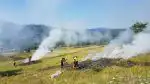
When forest land is diverted, the Act requires compensatory afforestation on an equivalent area of non-forest land, or double the diverted area if such land is unavailable. Karnataka’s Compensatory Afforestation Fund Management and Planning Authority manages these funds, which have accumulated over ₹8,000 crore since 2016. According to Karnataka Forest Department CAMPA activities, the state prioritizes afforestation in degraded zones across Raichur, Kalaburagi, and Vijayapura districts where green cover remains critically low.
Exam questions often probe whether candidates understand the mechanics of compensatory schemes. The diverted land must match the ecological value of cleared forests, meaning loss of old-growth forest in Kodagu cannot be offset by planting saplings in semi-arid regions without additional measures. The 2023 amendments tightened compliance timelines, requiring afforestation to commence within six months of diversion approval.
Common Examination Scenarios and Application
Competitive exams present hypothetical cases where candidates must identify violations or recommend lawful procedures. A typical scenario involves a proposed mining lease in Ballari district overlapping a reserve forest. Candidates must recognize that Section 2 prohibits diversion without central clearance, assess whether compensatory land is available, and determine if the Environmental Impact Assessment justifies ecological disruption.

Another frequent question type involves distinguishing between deemed forests and legally recorded forests. The Supreme Court’s T.N. Godavarman case expanded the Act’s scope to include all areas meeting the dictionary definition of forest, regardless of official classification. In Karnataka, this interpretation affects scrublands in the northern districts and sacred groves maintained by local communities, both of which now fall under regulatory oversight despite lacking formal forest status in revenue records.
Enforcement Challenges and Activist Perspectives
Environmental and forest activists consistently highlight gaps between legislative intent and ground-level enforcement. Illegal encroachments persist in protected areas near Nagarhole and Bannerghatta, often facilitated by delayed prosecutions and weak penalties under the original Act. The 2023 amendments aim to address this through enhanced fines reaching ₹1 crore for large-scale violations, though implementation mechanisms remain under judicial and administrative scrutiny.
For job seekers targeting forest department positions, understanding enforcement protocols is essential. Range officers must document violations, coordinate with revenue authorities to verify land records, and initiate legal proceedings under both the Forest Conservation Act and complementary statutes like the Wildlife Protection Act. Interview panels frequently assess whether candidates can navigate jurisdictional overlaps and recommend corrective actions aligned with conservation priorities.
Strategic Preparation Tips for Candidates
Focus on amendment-driven changes introduced in 2023, as recent legislative updates dominate current examination patterns. Create comparison tables contrasting pre- and post-amendment provisions, particularly regarding approval thresholds and penalty structures. Practice case analysis using Karnataka-specific examples — the Yettinahole diversion project, Hubballi-Ankola railway alignment, and Linganamakki reservoir expansion all provide rich material for application-based questions.
Integrate forest conservation knowledge with broader environmental law topics including the National Forest Policy, Biological Diversity Act, and Scheduled Tribes and Other Traditional Forest Dwellers Act. Questions rarely test isolated provisions; they assess your ability to identify which law applies when forest land intersects with tribal rights, biodiversity hotspots, or infrastructure corridors. Mastery comes not from rote learning but from understanding how these legal frameworks collectively govern Karnataka’s 38,000 square kilometers of forests, shaping both ecological futures and administrative careers.