Forest patrolling in India operates through a coordinated network of forest guards, range officers, and technology-driven surveillance systems designed to protect over 700,000 square kilometers of designated forest land. In Karnataka, where the Western Ghats biodiversity hotspot intersects with rapidly expanding urban centers, patrolling mechanisms have evolved to address threats ranging from illegal timber harvesting to human-wildlife conflict mitigation.
Table of Contents
Hierarchical Structure of Forest Patrolling Teams
The Indian Forest Service establishes a clear chain of command for patrolling operations. At the ground level, forest guards conduct daily foot patrols along designated beats, typically covering 10 to 15 kilometers per shift. These guards report to foresters and range forest officers who oversee multiple beats within a territorial division. Deputy conservators and conservators of forests manage broader jurisdictional areas, coordinating anti-poaching squads and rapid response teams.

Karnataka maintains approximately 6,000 forest guards across its protected areas, including Bandipur Tiger Reserve, Nagarhole National Park, and Bhadra Wildlife Sanctuary. Each guard receives basic training in wildlife identification, GPS navigation, and conflict de-escalation before deployment. Senior officers undergo specialized training at institutions like the Indira Gandhi National Forest Academy in Dehradun.
Daily Patrol Routines and Documentation Practices
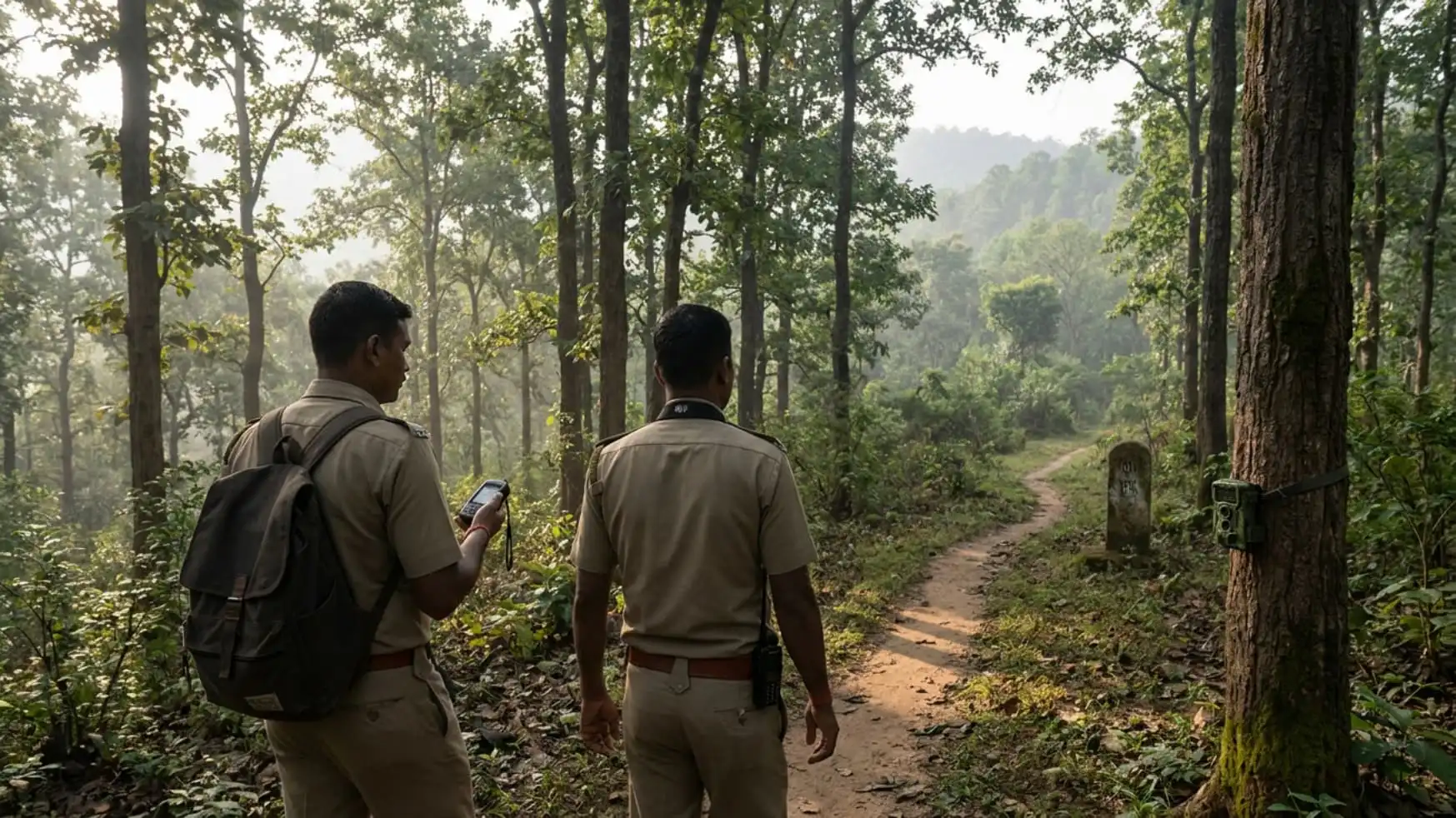
Morning patrols commence between 5:30 and 6:00 AM, when wildlife activity peaks and illegal logging operations often begin. Guards carry handheld GPS devices that record patrol routes, creating verifiable digital trails reviewed by supervisory staff. Physical logbooks document observations including animal sightings, signs of human intrusion, snare traps discovered, and boundary encroachment attempts.
Patrol frequency varies by threat assessment. High-risk zones near international borders or areas with documented poaching incidents receive daily coverage, while peripheral forest sections may see patrols two to three times weekly. According to [CITE: Karnataka Forest Department patrol frequency standards wildlife protection], critical elephant corridors undergo bi-daily monitoring during crop-razing seasons to prevent human casualties.

Night patrols address nocturnal poaching activity, particularly targeting sandalwood smugglers who exploit darkness for extraction operations. These shifts involve armed forest guards working in pairs, equipped with night-vision binoculars and communication radios linked to nearest police outposts.
Technology Integration in Modern Patrolling
Camera trap networks have transformed wildlife monitoring across Indian forests. Karnataka deployed over 1,200 motion-activated cameras in tiger reserves, capturing photographic evidence used for population estimation and behavior pattern analysis. Forest guards retrieve SD cards during routine patrols, uploading imagery to centralized databases that employ AI-based individual animal identification.
Drone surveillance supplements ground patrols in difficult terrain. Unmanned aerial vehicles map forest canopy changes, detect unauthorized access roads, and provide real-time aerial reconnaissance during wildfire emergencies. The Forest Survey of India collaborates with state departments to analyze satellite imagery, identifying deforestation hotspots that trigger focused patrolling interventions.

Mobile applications like M-STrIPES (Monitoring System for Tigers Intensive Protection and Ecological Status) enable digital data collection during patrols. Guards record GPS-tagged observations directly into smartphones, eliminating transcription errors and accelerating information flow to decision-makers. Some Karnataka divisions issue wearable body cameras to document encounters with wildlife or suspected offenders, creating evidence admissible in forest offense prosecutions.
Legal Authority and Enforcement Actions
Forest guards derive enforcement powers from the Indian Forest Act of 1927, Wildlife Protection Act of 1972, and Karnataka Forest Act. These statutes authorize personnel to detain suspects, seize contraband timber or animal parts, and register First Information Reports at local police stations. Officers can impose spot fines for minor infractions like unauthorized cattle grazing, though serious offenses require judicial proceedings.
| Violation Type | Detection Method | Penalty Range |
|---|---|---|
| Illegal Timber Felling | Patrol observation, tip-offs | ₹10,000 to ₹25,000 fine, imprisonment up to 3 years |
| Poaching Wildlife | Camera traps, physical evidence | ₹25,000 minimum fine, imprisonment 3 to 7 years |
| Forest Fire Negligence | Patrol reports, satellite data | ₹15,000 fine, community service |
| Unauthorized Encroachment | Boundary surveys, GPS mapping | Eviction, ₹5,000 to ₹50,000 fine |
Prosecution success rates remain challenged by evidentiary standards requiring eyewitness testimony and proper chain-of-custody documentation. According to [CITE: Wildlife Crime Control Bureau conviction rates India forest offenses], conviction percentages hover around 12 to 18 percent nationally, underscoring the need for stronger forensic capabilities and witness protection protocols.
Community Participation and Intelligence Networks
Joint Forest Management Committees bridge the gap between forest departments and local communities. Tribal populations living in forest fringe areas contribute valuable intelligence about suspicious activities, often alerting guards to poaching camps or smuggling routes before formal patrols detect them. Some Karnataka divisions employ village-level informants who receive financial incentives for actionable information leading to arrests.
Eco-development initiatives recruit former poachers as forest watchers, leveraging their terrain knowledge while providing alternative livelihoods. These community members conduct informal patrols, repair boundary fencing, and maintain water sources for wildlife, extending the department’s operational reach without proportional budget increases.
Challenges Facing Patrol Operations
Personnel shortages persist as a critical constraint. Sanctioned forest guard positions exceed actual deployment by 20 to 30 percent in several states, forcing existing staff to cover larger territories with reduced effectiveness. Physical risks including snake bites, elephant attacks, and confrontations with armed timber mafias contribute to low morale and high attrition rates.
Budget limitations restrict equipment upgrades and training opportunities. Many Karnataka range offices operate with decades-old jeeps lacking proper maintenance, while communication infrastructure remains unreliable in remote forest blocks. Salary disparities between forest guards and equivalent state police positions make recruitment increasingly difficult in competitive job markets.
Climate change introduces new patrolling complexities. Shifting wildlife migration patterns require dynamic patrol route adjustments, while extreme weather events like unprecedented floods or droughts demand emergency response protocols that stretch departmental resources. As Karnataka’s forests face mounting anthropogenic pressures, the effectiveness of patrolling systems will determine whether biodiversity conservation goals can withstand development imperatives.