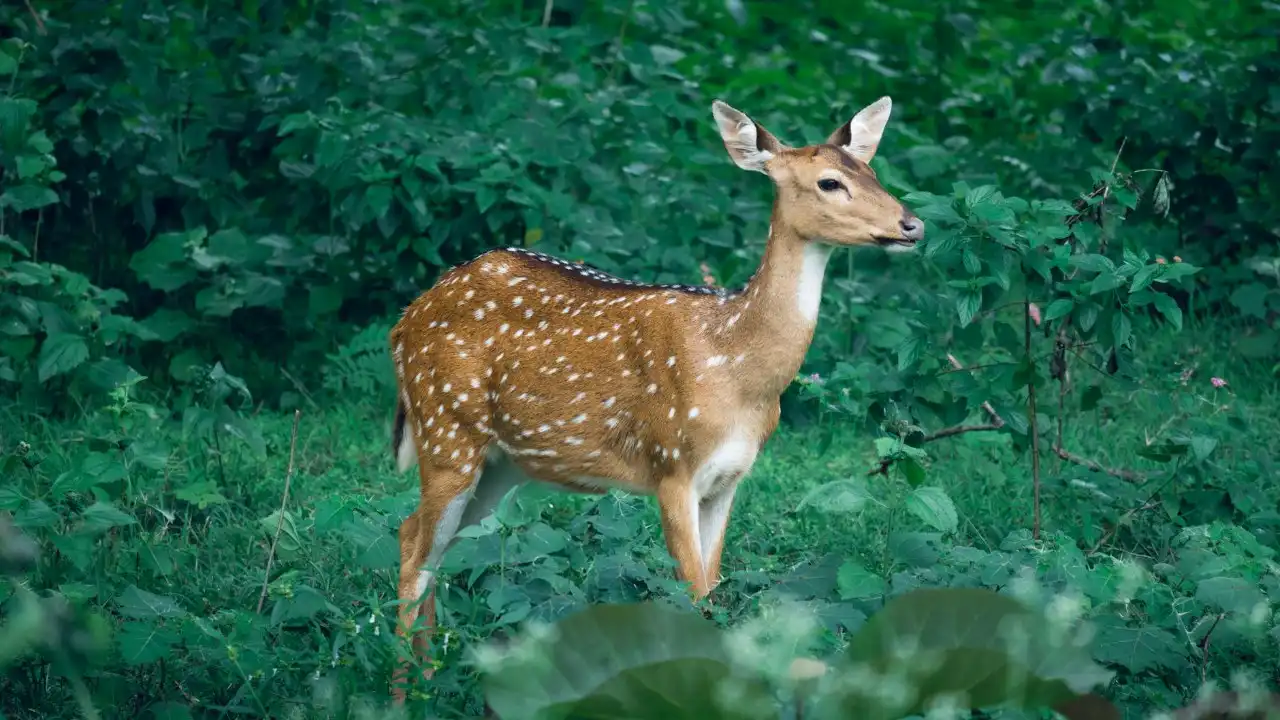
Karnataka shelters some of India’s most biodiverse wildlife sanctuaries, protecting ecosystems that range from the Western Ghats’ evergreen forests to dry deciduous woodlands across the Deccan plateau. These protected areas safeguard over 500 vertebrate species, including endangered tigers, Asian elephants, and lion-tailed macaques, while supporting the livelihoods of communities that depend on healthy watersheds and stable climates.
Table of Contents
Major Wildlife Sanctuaries Across Karnataka
The state maintains 25 wildlife sanctuaries spanning approximately 5,500 square kilometers. Bandipur National Park, established in 1974, forms part of the Nilgiri Biosphere Reserve and protects one of southern India’s largest tiger populations. Nagarhole, officially known as Rajiv Gandhi National Park, adjoins Bandipur and hosts dense populations of gaur, wild dogs, and over 270 bird species.
Along the Western Ghats, Bhadra Wildlife Sanctuary preserves critical montane rainforest habitats. The sanctuary’s perennial rivers supply water to downstream agricultural regions in Chikmagalur and Shimoga districts. Dandeli-Anshi Tiger Reserve in Uttara Kannada district protects the endangered black panther alongside significant populations of hornbills and flying squirrels. Coastal sanctuaries like Someshwara in Udupi district conserve unique laterite forest ecosystems found nowhere else in the state.
Ecological Functions Beyond Species Protection
These sanctuaries perform watershed protection services that directly benefit Karnataka’s agricultural economy. According to Karnataka watershed development services dashboard, forests in protected areas regulate water flow to major river systems including the Cauvery, Krishna, and Tungabhadra. The tree canopy reduces soil erosion during monsoon periods, preventing siltation in reservoirs that supply irrigation water to over two million hectares of farmland.
Carbon sequestration represents another measurable benefit. Mature forests in sanctuaries like Kudremukh absorb atmospheric carbon dioxide at rates exceeding 3.5 tons per hectare annually, contributing to climate stabilization. The intact forest cover also moderates local temperatures and maintains humidity levels essential for coffee and spice cultivation in adjacent regions.
| Sanctuary Name | District | Area (sq km) | Key Species |
|---|---|---|---|
| Bandipur | Chamarajanagar | 874 | Tiger, Elephant, Dhole |
| Nagarhole | Kodagu, Mysuru | 643 | Leopard, Gaur, Sloth Bear |
| Bhadra | Chikmagalur, Shivamogga | 492 | Tiger, King Cobra, Malabar Giant Squirrel |
| Dandeli-Anshi | Uttara Kannada | 1,365 | Black Panther, Hornbill, Crocodile |
| Ranganathittu | Mandya | 0.67 | Painted Stork, Spoonbill, Pelican |
Employment and Livelihood Opportunities
Wildlife sanctuaries generate direct employment for forest guards, researchers, veterinarians, and ecotourism operators. The Karnataka Forest Department employs over 1,200 personnel specifically for sanctuary management and anti-poaching patrols. Ecotourism facilities at Bandipur, Nagarhole, and Kabini collectively attract approximately 400,000 visitors annually, supporting jobs for naturalist guides, hospitality workers, and transport operators in nearby towns.
Non-timber forest product collection provides supplementary income to tribal communities in buffer zones. Regulated harvesting of honey, tamarind, amla, and medicinal plants occurs under Joint Forest Management committees, distributing economic benefits while maintaining forest health. Several sanctuaries have initiated community-based conservation programs where local residents participate in habitat monitoring and receive training in sustainable resource management.
Challenges Threatening Sanctuary Integrity
Human-wildlife conflict intensifies as agricultural land extends closer to sanctuary boundaries. Elephant crop raiding during harvest seasons causes significant economic losses to farmers in Hassan, Kodagu, and Chikmagalur districts. The state government compensates affected farmers, but delayed payments and inadequate coverage strain relationships between rural communities and conservation authorities.

Linear infrastructure projects fragment wildlife corridors. Highway expansions and railway track doublings cut through traditional elephant migration routes between protected areas. Traffic accidents kill an average of 15 elephants annually along the Mysuru-Hunsur road segment adjacent to Nagarhole. Anthropogenic fires during summer months destroy ground vegetation and threaten nesting sites for ground-dwelling birds.
Invasive species like lantana and parthenium reduce native plant diversity in several sanctuaries. These aggressive colonizers outcompete indigenous flora, diminishing food availability for herbivores. Eradication programs require sustained manual removal efforts, straining limited sanctuary budgets and personnel resources.
Conservation Strategies and Citizen Participation
The Karnataka State Wildlife Board has prioritized corridor restoration to maintain genetic connectivity between isolated populations. Land acquisition initiatives focus on creating contiguous forest patches linking Bandipur, Nagarhole, Wayanad, and Mudumalai, forming an unbroken 3,700 square kilometer tiger landscape. Radio collaring programs track animal movements, providing data that informs corridor placement and mitigation measures for infrastructure projects.
Citizens contribute through wildlife monitoring platforms where sightings reported via mobile applications help map species distribution patterns. According to Karnataka Forest Department Annual Reports page, over 8,000 verified observations submitted by volunteers during 2023 improved understanding of seasonal migration patterns and habitat preferences. Environmental organizations conduct awareness campaigns in schools near sanctuary areas, fostering conservation ethics among younger generations.
Regulated tourism with strict visitor limits prevents habitat degradation while generating revenue for conservation activities. Sanctuaries enforce vehicle quotas, designated zones, and noise restrictions that minimize disturbance to wildlife. Revenue from entry fees and safari permits funds anti-poaching equipment, veterinary care, and habitat restoration projects.
Preserving Karnataka’s wildlife sanctuaries requires balancing ecological imperatives with economic development pressures. These protected landscapes deliver quantifiable benefits extending far beyond their boundaries, sustaining water security, climate stability, and economic opportunities for communities across the state. Active participation from residents, policymakers, and conservation professionals will determine whether future generations inherit functional ecosystems or fragmented remnants.