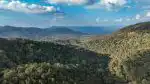
Karnataka harbors some of India’s most biodiverse protected landscapes, spanning Western Ghats rainforests to Deccan Plateau scrublands. For students preparing for competitive exams or pursuing environmental studies, understanding Karnataka’s national park system offers insights into conservation policy, ecosystem dynamics, and India’s wildlife protection framework.
Table of Contents
Five National Parks Under Karnataka Jurisdiction
Karnataka administers five national parks, each protecting distinct ecological zones. Bannerghatta National Park near Bangalore provides accessible wildlife education to urban populations, while Bandipur National Park forms part of the Nilgiri Biosphere Reserve, India’s largest protected tiger habitat. Nagarhole National Park, officially Rajiv Gandhi National Park, connects with Bandipur to create a contiguous conservation corridor stretching into Kerala and Tamil Nadu.

Anshi National Park in Uttara Kannada district protects moist deciduous forests along the Kali River basin, serving as a critical elephant migration route. Kudremukh National Park in the Western Ghats showcases montane grasslands and shola forests, representing a unique high-altitude ecosystem. Together, these parks cover approximately 3,200 square kilometers, constituting roughly three percent of Karnataka’s total land area.
Flagship Species and Conservation Status
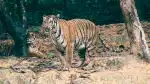
The Bengal tiger anchors conservation efforts across Bandipur and Nagarhole, with Karnataka hosting approximately 524 tigers according to Status of Tigers in India 2018. This represents nearly 18 percent of India’s wild tiger population. Asian elephants maintain established migration corridors between all five parks, though human-wildlife conflict along forest boundaries presents ongoing management challenges.
The Western Ghats parks shelter endemic species found nowhere else on Earth. Lion-tailed macaques inhabit Kudremukh’s evergreen canopy, while Malabar giant squirrels occupy mid-canopy niches in Anshi. Reptile diversity remains exceptionally high, with king cobras, Indian rock pythons, and multiple viper species documented across all parks. Avian populations include over 270 species, making Karnataka’s protected areas critical for migratory and resident bird conservation.
| National Park | Area (sq km) | Primary Ecosystem | Key Species |
|---|---|---|---|
| Bandipur | 874 | Dry deciduous forest | Tiger, elephant, gaur |
| Nagarhole | 643 | Moist deciduous forest | Tiger, leopard, dhole |
| Bannerghatta | 104 | Scrub and dry forest | Elephant, sloth bear, leopard |
| Kudremukh | 600 | Montane grassland, shola | Lion-tailed macaque, sambar |
| Anshi | 340 | Evergreen and semi-evergreen | Black panther, hornbill species |
Educational and Research Opportunities

Karnataka’s national parks function as living laboratories for ecological research. Bangalore University, University of Agricultural Sciences Bangalore, and Indian Institute of Science maintain ongoing field studies within park boundaries, focusing on population dynamics, habitat modeling, and climate impact assessments. Students pursuing forestry, wildlife biology, or environmental science can access internship programs through the Karnataka Forest Department during non-monsoon months.
The Centre for Wildlife Studies in Bangalore collaborates with park authorities on long-term monitoring projects, creating opportunities for undergraduate and graduate field assistants. These programs emphasize camera trap analysis, vegetation sampling, and human-wildlife conflict mitigation strategies. Published research from Karnataka’s parks contributes to broader conservation frameworks applied across South Asia.
Visiting Guidelines and Student Access
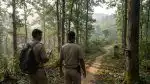
Entry permits vary by park and season. Bandipur and Nagarhole allow vehicle safaris during daylight hours, with advance booking required during peak seasons from October through March. Bannerghatta operates a biological park alongside the national park zone, offering controlled wildlife viewing suitable for school groups. Kudremukh restricts access to trekking routes requiring forest department clearance, while Anshi permits limited eco-tourism with registered guides.
Student groups receive discounted entry fees at most parks when coordinating through educational institutions. Photography requires separate permits, with drone usage prohibited across all protected areas. The monsoon season from June through September sees park closures or restricted access due to trail conditions and wildlife breeding cycles.
Conservation Challenges Facing Karnataka Parks
Habitat fragmentation threatens corridor connectivity, particularly between Bandipur and Nagarhole where National Highway 212 bisects elephant migration routes. The Karnataka Forest Department has implemented elevated corridors and night traffic restrictions, yet vehicle strikes remain a documented mortality factor. Mining legacy impacts continue affecting Kudremukh, where iron ore extraction ceased in 2005 but landscape restoration progresses gradually.
Invasive plant species, notably Lantana camara and Parthenium hysterophorus, compete with native vegetation across dry deciduous zones. Fire management balances controlled burns against wildfire risk, with prescribed burning protocols applied during February and March to reduce fuel loads. Climate pattern shifts alter fruiting cycles and water availability, requiring adaptive management strategies as monsoon reliability decreases.
Practical Applications for Exam Preparation
National park questions appear regularly in Karnataka Public Service Commission exams, UPSC Civil Services prelims, and Forest Range Officer tests. Students should memorize establishment years, area statistics, and flagship species for each park. Understanding Project Tiger implementation, particularly Karnataka’s role as a source population for tiger reintroduction programs, provides context for policy questions.
Map-based questions require identifying park locations relative to districts and neighboring states. Bandipur and Nagarhole border Tamil Nadu and Kerala respectively, forming interstate conservation complexes tested in geography sections. Biodiversity hotspot concepts link directly to Western Ghats parks, where endemism rates exceed 40 percent for amphibians and flowering plants. Current affairs questions may reference human-wildlife conflict statistics, tourism revenue figures, or recent wildlife census data released by state authorities.
Karnataka’s national parks represent more than protected territories on administrative maps. They function as genetic reservoirs, climate refugia, and educational resources supporting both conservation goals and academic development. Students engaging seriously with these landscapes gain practical knowledge applicable across environmental careers, policy analysis, and informed citizenship within India’s biodiversity framework.